Tinned Copper Braid is a versatile and reliable material in various industries. Renowned expert in electrical materials, Dr. Emily Carter, states, "Tinned copper braid enhances conductivity and protects against corrosion." This statement underscores the significance of tinned copper braid in ensuring efficient electrical connections and longevity.
The process of tinning copper braid involves coating pure copper with a thin layer of tin. This not only improves the braid's resistance to oxidation but also enhances its flexibility. In applications such as telecommunications, aerospace, and automotive, the demand for high-quality connectivity remains critical.
Engineers often face challenges in choosing the right materials. Tinned copper braid, however, consistently proves its worth. The unique properties of this braided wire set a benchmark for durability and performance.
As industries evolve, so do the demands for materials like tinned copper braid. Companies must adapt to innovations and potential weaknesses in existing approaches. Continuous research is necessary to maintain high standards. Tinned copper braid remains a reliable choice, but awareness of its limitations is essential for future advancements.
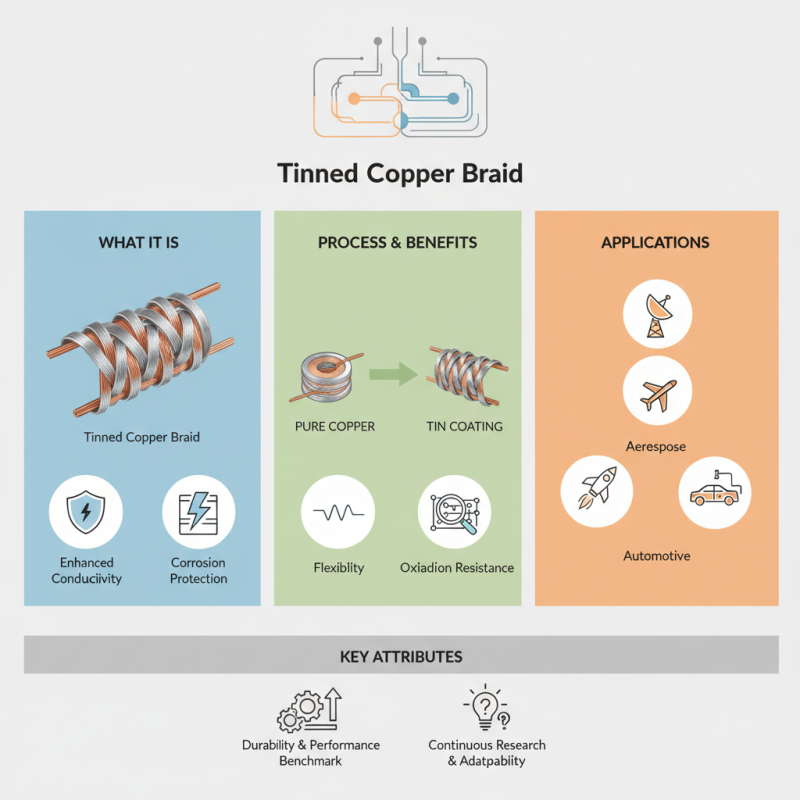
Tinned copper braid is a versatile material used in various applications. It is made by weaving strands of copper that have been coated with tin. This coating provides excellent corrosion resistance and enhances conductivity. The combination of tin and copper allows for improved electrical performance over time.
One of the key properties of tinned copper braid is its flexibility. This flexibility makes it easy to install in tight spaces. It can conform to various shapes without breaking, which is critical in applications like grounding and shielding. Additionally, its lightweight nature reduces the overall weight of components.
Despite its benefits, tinned copper braid has some drawbacks. The tin coating can wear off over time, especially in high-abrasion environments. This may lead to compromised electrical performance. Users need to frequently inspect and replace worn components to maintain system integrity. Understanding these nuances can help in better utilizing tinned copper braid for specific applications.
Tinned copper braid is commonly used in electronic applications. Its mechanical properties are significant for a range of uses. One crucial aspect is its flexibility. This property allows easy installation in various environments. The braid withstands repeated bending without damage. This flexibility enhances performance in tight spaces.
Conductivity is another key factor. Tinned copper braid retains excellent electrical conductivity. The tinned surface prevents oxidation, maintaining efficiency. Reliable conductivity is vital for high-frequency applications. Any drop in performance can lead to signal loss. Thus, understanding these mechanical properties is essential.
Moreover, the tensile strength of tinned copper braid is important. It provides durability under strain. However, if not assessed correctly, this can lead to failures in critical situations. It is essential to balance flexibility and strength. Reflecting on these attributes helps engineers choose the right materials. Proper selection impacts the longevity and effectiveness of designs.
Tinned copper braid is widely recognized in electrical engineering for its excellent conductivity and resistance to corrosion. This material's unique composite structure makes it ideal for various applications. A recent industry report indicates that tinned copper braid is utilized in grounding and shielding, delivering reliable performance in critical environments.
In high-frequency applications, tinned copper braid is particularly effective. Its flexibility allows for easy installation in tight spaces. Moreover, its resistance to oxidation enhances the lifespan of electrical systems. According to the International Electrotechnical Commission, using tinned copper braid can reduce signal loss by up to 15%, making it a preferred choice for data transmission cables.
Furthermore, in automotive and aerospace sectors, tinned copper braid serves as protective shielding. It prevents electromagnetic interference, ensuring that communications remain clear and uninterrupted. The increasing complexity of modern electrical systems highlights a growing need for such effective solutions. However, manufacturers face challenges in maintaining consistent quality and performance across the production line. Continuous improvement in this area is essential for meeting industry standards and customer expectations.
Tinned copper braid is a conductive material known for its versatility and durability. It consists of copper strands coated with tin, enhancing its resistance to corrosion. This feature makes it ideal for various applications, especially in environments exposed to moisture. Tinned copper braid is widely used in electrical grounding, shielding cables, and connections in telecommunications.
When comparing tinned copper braid to other conductive materials, such as aluminum or bare copper, several factors emerge. Tinned copper outperforms aluminum in conductivity and heat resistance. It also shows better longevity in harsh conditions. However, bare copper is more conductive, as it lacks the protective tin layer. Choosing the right material often depends on the specific environment and intended use.
Tips: When selecting conductive materials, consider the environment. Moist conditions significantly affect performance. Always assess the cost versus durability. A cheaper option might not be the best in the long run. Remember, investing in quality materials can save time and money. Flexibility in application is another critical aspect; it can ease installation and maintenance.
Tinned copper braid is an essential component in various electrical and electronic applications. Its use is guided by industry standards to ensure safety and reliability. The American National Standards Institute (ANSI) and the Institute of Electrical and Electronics Engineers (IEEE) have set specific guidelines. These standards reflect the necessity for quality and performance.
In various environments, tinned copper braid offers resistance to corrosion. This feature is crucial in marine and industrial applications. Manufacturers often adhere to National Electrical Code (NEC) regulations to maintain compliance. It is vital for ensuring safety in electrical installations. Despite its advantages, potential users must remain aware of variations in quality and specifications. Not all tinned copper braid meets the same standards.
Moreover, ongoing testing and certification are necessary for maintaining product safety. It’s easy to overlook these concerns, yet due diligence is essential. When selecting tinned copper braid, customers should rely on trusted resources and verified suppliers. This careful approach helps mitigate risks associated with subpar materials. Manufacturers should embrace transparency in their compliance processes to foster trust and reliability in the industry.
: Tinned copper braid is a woven material made from copper strands coated with tin.
Key properties include flexibility, corrosion resistance, and excellent electrical conductivity.
Flexibility allows for easy installation in tight spaces and helps maintain performance under strain.
The tin coating can wear off over time, especially in high-abrasion environments, affecting performance.
Excellent conductivity prevents signal loss, which is vital for high-frequency electrical applications.
Yes, it has good tensile strength but needs assessment to avoid failures in critical situations.
Tinned copper has better conductivity and heat resistance compared to aluminum.
Always consider the environment and application requirements to choose the right conductive material.
Yes, cheaper options may lead to poorer performance. Investing in quality can save resources.
Users need regular inspections to ensure longevity, as wear may compromise electrical performance over time.
Tinned Copper Braid is a versatile conductive material widely used in various electrical engineering applications. This article provides an overview of its material properties, highlighting the benefits of tin plating, such as improved corrosion resistance and enhanced conductivity. It emphasizes the mechanical properties of Tinned Copper Braid, which are crucial for ensuring reliable performance in demanding environments.
In addition, the article discusses key applications of Tinned Copper Braid, including its role in shielding, grounding, and providing flexible connections in electrical systems. A comparative analysis reveals its advantages over other conductive materials, making it a preferred choice in many scenarios. Finally, the discussion on industry standards and regulations emphasizes the importance of compliance in the usage of Tinned Copper Braid, ensuring safety and reliability in electrical engineering practices.
Xingma